
Alternative Investment Portfolio Considerations
Alternative investments can enhance portfolio diversification, help mitigate risk, and offer potential for higher returns. By accessing unique opportunities, they can help reduce volatility and may provide a hedge against market downturns.

Alternative Investment Portfolio Considerations
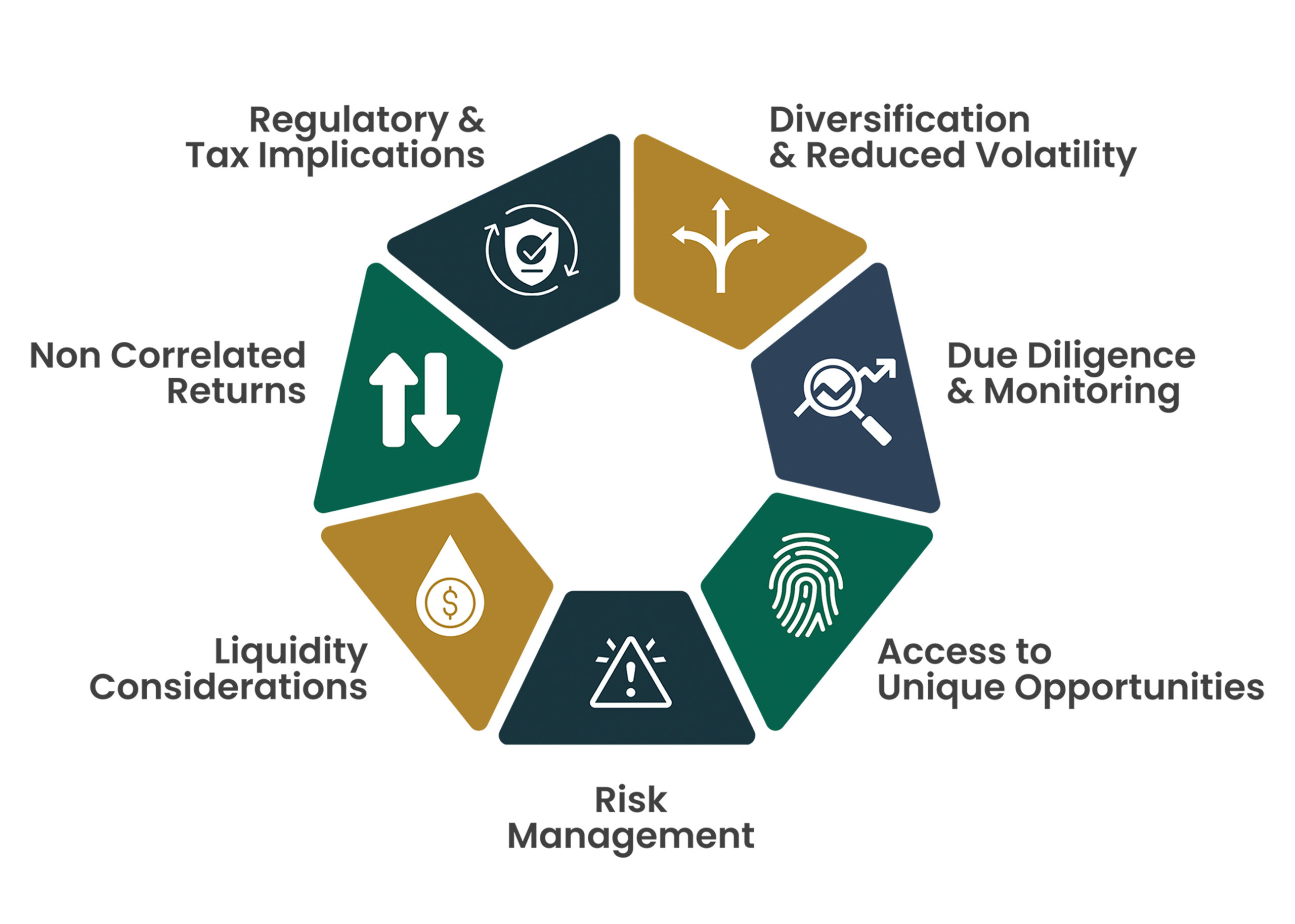
When considering investing beyond traditional stocks & bonds, analyzing alternatives in a portfolio may enhance returns and manage risk. Depending on the type of investment, it’s essential to evaluate their characteristics and possible benefits which may include:
Diversification: Alternative investments typically have lower correlations with traditional assets like stocks and bonds, helping reduce overall portfolio volatility.
Potential for Higher Returns: Alternatives can offer the potential for solid returns with varying levels of risk.
Risk Management: Alternatives can serve as a hedge against risks like inflation, currency fluctuations or market downturns due to their distinct risk-return profiles. This can make them a valuable part of your risk management strategy.
Access to Unique Opportunities: Alternative investments provide access to sectors or strategies not available through traditional investments vehicles.
Liquidity Considerations: Many alternative investments have limited liquidity and can require longer-term capital commitments. This requires careful planning for liquidity and cash flow management.
How Do Alternative Investments Help Diversify a Portfolio?
Alternative investments may help diversify a portfolio because they can behave differently from traditional stocks, bonds and cash. They may include private equity, private credit, real estate, infrastructure, commodities, hedge funds and other non-public market strategies.
Diversification does not remove risk, but it may help reduce dependence on one asset class or market cycle. Before adding alternatives, investors should review liquidity needs, risk tolerance, manager due diligence, investment structure and overall portfolio fit.
For deeper planning context, review our alternative investments overview and investor qualification requirements.
Due Diligence and Monitoring: Manager due diligence is crucial in selecting alternative investments. Factors like fund managers’ track records, fees and liquidity terms are important considerations.
Regulatory and Tax Implications: Alternative investments often have specific regulatory requirements and may be subject to different tax treatments. It is important to understand how these factors may affect your broader investment strategy and financial planning.
Certain alternative investments may also require review of investor qualification requirements depending on investment structure, accreditation standards and regulatory eligibility.
Our Advantage
Partner with Konza Global to develop your tailored portfolio needs. Our commitment to thorough research, personalized advice and innovative solutions provides your portfolio with benefits from the unique advantages of alternative investments. Together, we can build a diversified and resilient portfolio designed to achieve your long-term financial goals.
Frequently Asked Questions
How Do Alternative Investments Help Diversify a Portfolio?
Alternative investments may help diversify a portfolio because they can behave differently from traditional stocks, bonds and cash. They may help reduce dependence on one asset class or market cycle, but they also require careful review of risk, liquidity, manager due diligence and portfolio fit.
For deeper planning context, review our alternative investments overview and investor qualification requirements.
Why Are Liquidity Considerations Important for Alternative Investments?
Many alternative investments have limited liquidity and may require longer holding periods than traditional investments. Investors should evaluate cash-flow needs, redemption restrictions and investment timelines before allocating capital to alternatives.
What Should Investors Review Before Adding Alternative Investments?
Before adding alternative investments, investors should review portfolio goals, risk tolerance, liquidity needs, manager experience, fee structures and how the investment fits within an overall diversification strategy.
Are Alternative Investments Riskier Than Traditional Investments?
Alternative investments can involve different types of risk than traditional stocks and bonds. Depending on the strategy, they may include liquidity risk, valuation complexity, market risk or manager-specific risk, which is why due diligence and portfolio fit are important considerations.
What Types of Assets Are Considered Alternative Investments?
Alternative investments may include private equity, private credit, hedge funds, real estate, infrastructure, commodities and other non-public market investments that fall outside traditional stock and bond portfolios.

Tell us your financial aspirations, and we’ll handle the rest
Our team actively manages your portfolio using tailored strategies that maximize returns and minimize risk — providing you with reports and insights every step of the way.