Equity Incentive Plan Guidance
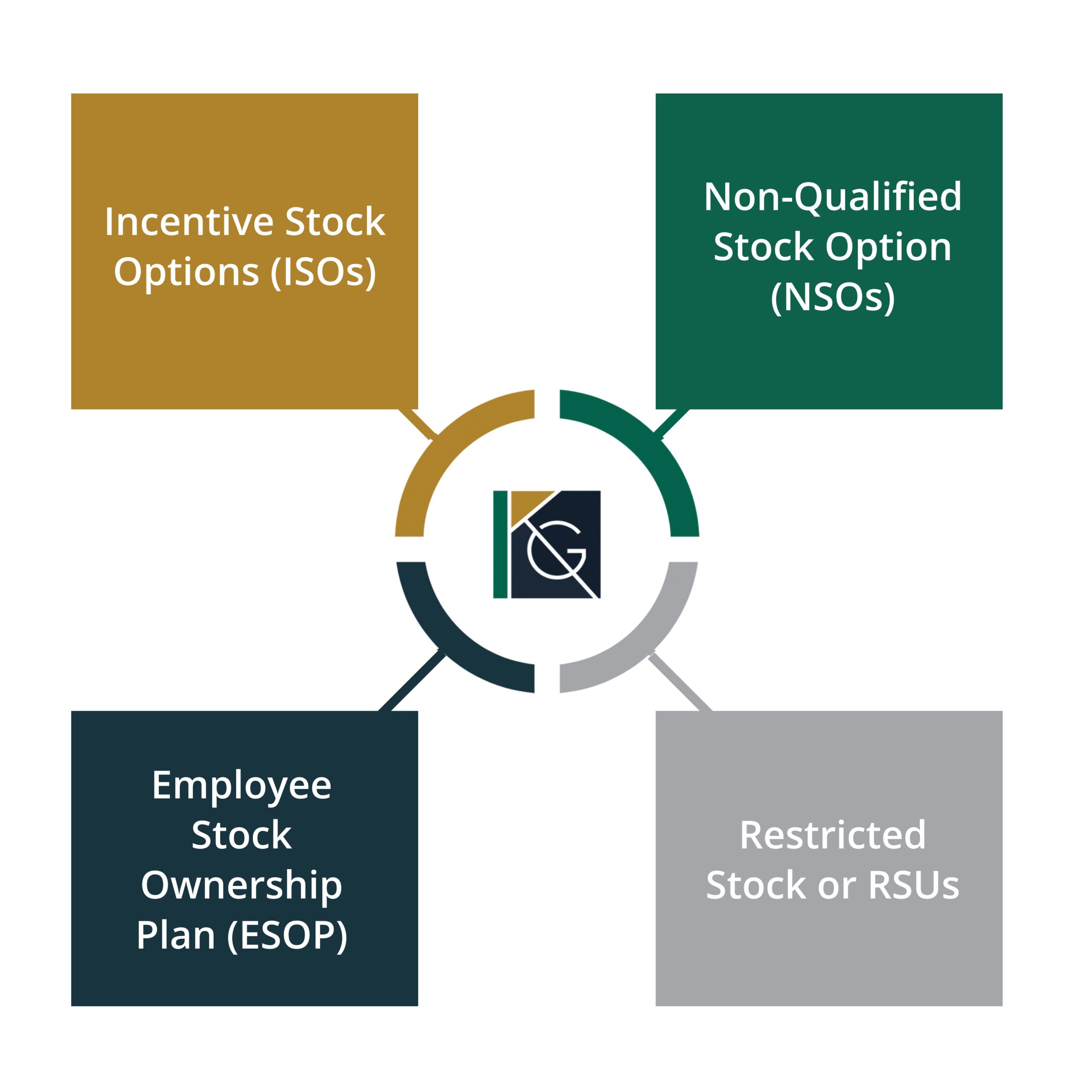
Whether you own Incentive Stock Options (ISOs), Non-Qualified Stock Options (NSOs), Restricted Stock or Employee Stock Ownership Plan (ESOP), understanding the tax implications and strategic planning of equity incentive plans can empower your long-term financial success.
Konza Global playlist
0:16
0:16
Equity Incentive Plan Guidance
Navigating stock options and equity incentive plans can be complex, but it’s crucial to create a strategy to maximize your financial outcomes.
Our team can help you review your equity incentive plan as part of your broader company stock plans. We analyze your unique circumstances and craft tailored strategies to help you make well-informed decisions.
Incentive Stock Options (ISOs)
ISOs offer a unique opportunity to capitalize on company growth with favorable tax treatment if handled correctly. We help you analyze and plan the timing of ISO exercises to avoid disqualifying dispositions, which could subject you to ordinary income tax instead of the lower long-term capital gains rate. With our planning, we prepare clients for potential Alternative Minimum Tax (AMT) liabilities while preserving the benefits of ISOs.Â
- Tax benefits
- AMT planning
- Expiration & redemption timing
- Avoiding disqualifying disposition
Non-Qualified Stock Options (NSOs)
NSOs, or ISOs that have converted into NSOs, come with the potential for significant tax liabilities at ordinary income rates upon exercise. Our advisors work with you through coordinated company stock plans to create a strategy that includes exercise timing, tax recognition and potential funding needs.
- Funding tax liabilities
- Discussion of company outlook
Restricted Stock or RSUs
Planning for the tax impact of RSUs, whether upon vesting or through an 83(b) election at the grant or transfer date, is a critical aspect of your financial plan. We recognize that covering the payment can be challenging, depending on when the RSUs vest. Our team works with you to evaluate your entire financial situation, helping coordinate your best approach. We’ll guide you through this process, ensuring your financial plan aligns with your goals and circumstances.Â
- Evaluate an 83(b) election
- Funding tax liabilitiesÂ
- Vesting conditions
- Termination risks of forfeiture
How Should Equity Incentive Plans Be Reviewed Before a Liquidity Event?
Equity incentive plans should be reviewed before a liquidity event because ISOs, NSOs, RSUs, restricted stock and ESOP shares can create major tax, timing and concentration decisions. A liquidity event may affect when shares become taxable, when options should be exercised, how much cash may be needed for taxes and how quickly concentrated stock should be diversified.
Konza helps clients evaluate equity decisions through coordinated company stock planning, including tax modeling, vesting schedules, exercise timing, cash flow needs and long-term portfolio risk. When employer stock is held inside a retirement plan, an NUA strategy may also need to be reviewed before rollovers or distributions.
Employee Stock Ownership Plan (ESOP)
An ESOP is a retirement plan that allows employees to have ownership in their company through employer stock contributions. Employees who have helped companies grow and achieve success can be rewarded with significant stock appreciation of their company shares.
For employer stock held inside qualified retirement plans, an NUA strategy may also need to be reviewed before rollover, distribution or diversification decisions are made.
We help integrate your ESOP into your broader retirement strategy, manage concentration risk and optimize tax-efficient distributions. Our team provides personalized guidance on diversification strategies, rollover options, risk management and planning for ESOP payouts to align with your long-term financial goals.
Our Advantage
Your equity incentive plan can be a powerful financial tool when managed properly. Our team is here to help you make coordinated decisions regarding your equity plan, tax implications, and long-term financial goals. We can guide you through the intricacies of equity incentive planning to create your pathway for success.
Tell us your financial aspirations, and we’ll handle the rest
Our team actively manages your portfolio using tailored strategies that maximize returns and minimize risk — providing you with reports and insights every step of the way.
Frequently Asked Questions About Equity Incentive Plans
How Should I Plan for Equity Compensation Before Changing Jobs?
Before changing jobs, review your vesting schedule, option expiration dates, tax exposure, exercise deadlines and company stock concentration. Some equity awards may be forfeited or may require action within a short window after separation, so timing matters.
A coordinated review of your company stock plans can help you understand what to exercise, what to hold, what may expire and how each decision fits your broader financial plan.
What Happens to Equity Incentive Plans During a Merger or Acquisition?
During a merger or acquisition, equity incentive plans may be converted, cashed out, accelerated, replaced or cancelled depending on the transaction terms. ISOs, NSOs, RSUs, restricted stock and ESOP benefits may each be treated differently.
Because merger and acquisition events can create tax, timing and liquidity decisions, executives and employees may also need to review related NUA strategy considerations when employer stock is held inside a qualified retirement plan.
How Can Equity Incentive Planning Help With Tax Risk?
Equity incentive planning can help manage tax risk by reviewing when income may be recognized, how option exercises are taxed, whether RSUs create withholding needs and how concentrated company stock affects long-term planning.
This is especially important when equity awards overlap with retirement planning, job changes, corporate transactions or broader company stock plans.
How Should Equity Incentive Plans Be Reviewed Before a Liquidity Event?
Before a liquidity event, equity incentive plans should be reviewed for vesting, tax timing, exercise costs, withholding needs, concentration risk and diversification opportunities. A liquidity event can turn paper wealth into taxable income or investable assets, so planning should happen before decisions are locked in.
For broader educational context, the NUA planning hub can help explain how net unrealized appreciation may fit into employer stock and retirement tax planning.